Tsenta · YC S26
We got tired of applying. So we made the browser do it.
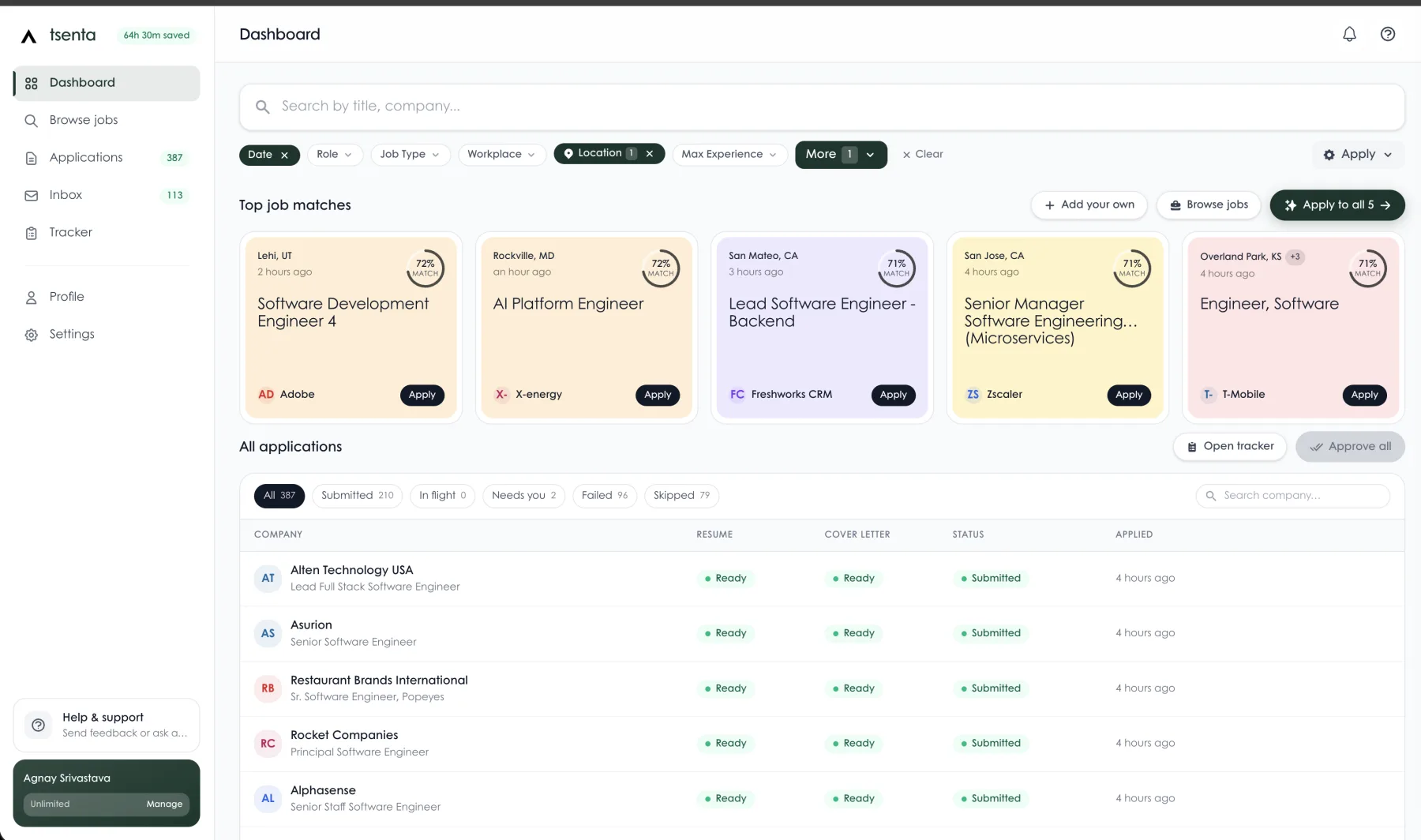
Tsenta finds matching jobs, prepares each application, submits it, and tracks the reply. The person stays in control.
“The alternative was another weekend lost to Workday.”
Tsenta began as founder frustration, not a market map.
Pulkit and I were international students applying into a brutal market. Between us, we had sent more than 3,000 applications. We knew the ritual: find the role late, reshape the same resume, make another Workday account, and type the same facts again.
We started building the precursor to Tsenta in 2025 from our Rose-Hulman dorm. The early product automated the form, but it also taught us the harder lesson: nobody wants a black box touching their career.
We threw away months of work and rebuilt the experience around visibility, approval, and control. That version became Tsenta and joined Y Combinator's Summer 2026 batch.
The loop
Find. Prepare. Apply. Track.
One agent across the whole search, with a visible handoff at every decision that matters.
- 01
Find
Watch career pages and surface roles that match the person, not just a keyword.
- 02
Prepare
Tailor the resume and application to the role while keeping every change reviewable.
- 03
Apply
Navigate the form, answer the questions, and submit only with the control the user chooses.
- 04
Track
Connect the reply to the right application so the job search becomes a readable pipeline.
What changed everything
Trust is not a feature when software acts on your career. It is the product.
That means showing the resume changes, the form answers, and the submission state. Review it, edit it, pause it, or let it run.
Still building
Make the process disappear, without hiding what happened.
That is the bar for Tsenta and the broader thesis I am writing about: agents should earn delegation through clear, controllable work.